
In any access governance conversation, access scoping inevitably comes up. Whether we’re talking about B2B SaaS environments serving multiple customers or B2E enterprises managing internal departments, the requirement is the same: users should only see and request access that is relevant to their context. Anything beyond that introduces risk, noise, and compliance headaches.
Oracle Access Governance’s new feature, Request Limited to Members of Organization, directly addresses this challenge through organization-scoped access bundles. Administrators can now define bundles that are requestable only by members of specific organizations, ensuring entitlement visibility and requests remain tightly aligned with organizational boundaries.
Scoping Access Bundles to Organizations
This capability fundamentally changes how access bundles behave in the self-service catalog. Previously, access bundles could either be made universally requestable by anyone or completely unavailable for self-service. Now, instead of that all-or-nothing model, bundles can also be restricted to the specific populations they’re meant for.
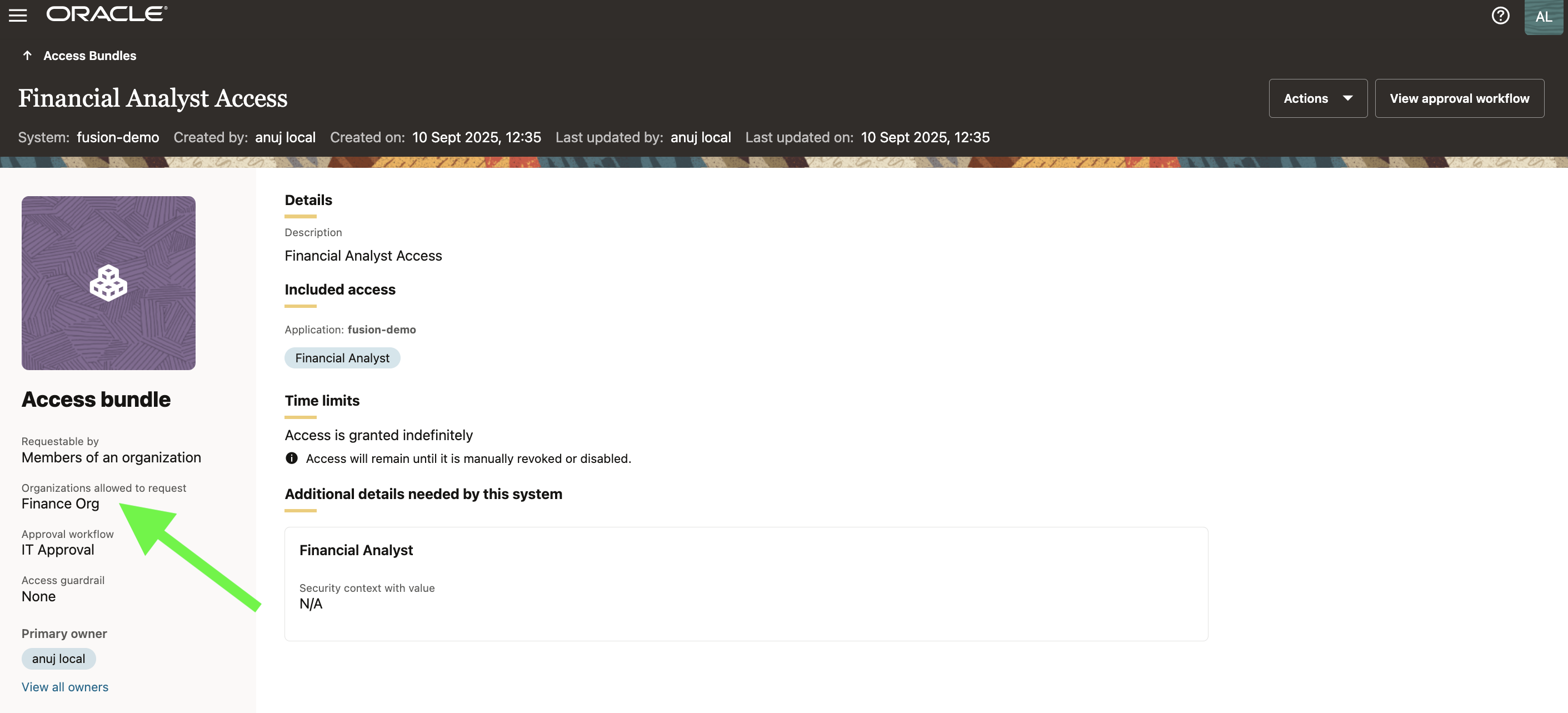
For example, a Financial Analyst bundle can be explicitly scoped to the Finance organization.
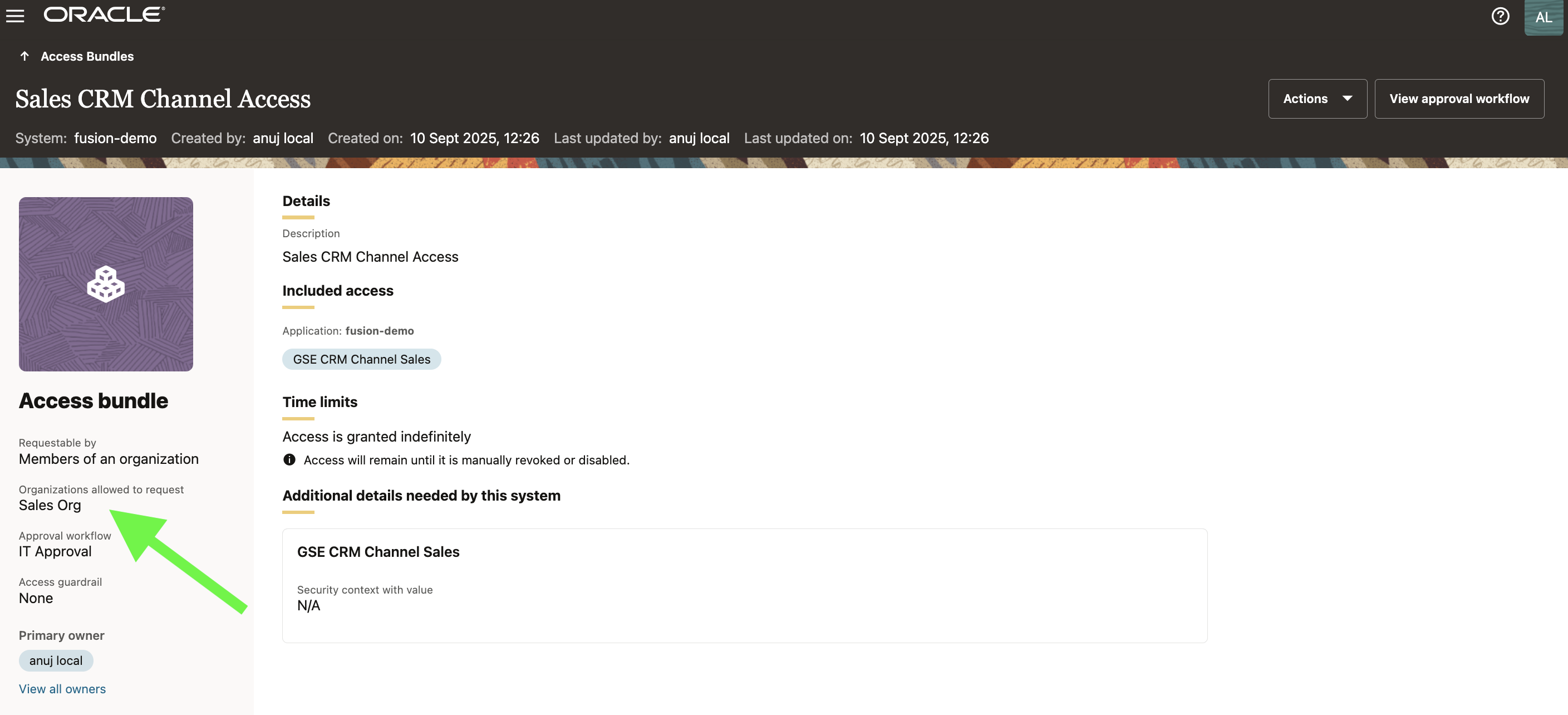
Similarly, a Sales CRM bundle can be published only to members of the Sales organization.
Behind the scenes, bundle creation now includes a configuration point where administrators choose who can request: no one, anyone, or members of specific organizations. Once “Members of an organization” is selected, one or more organizations can be mapped.

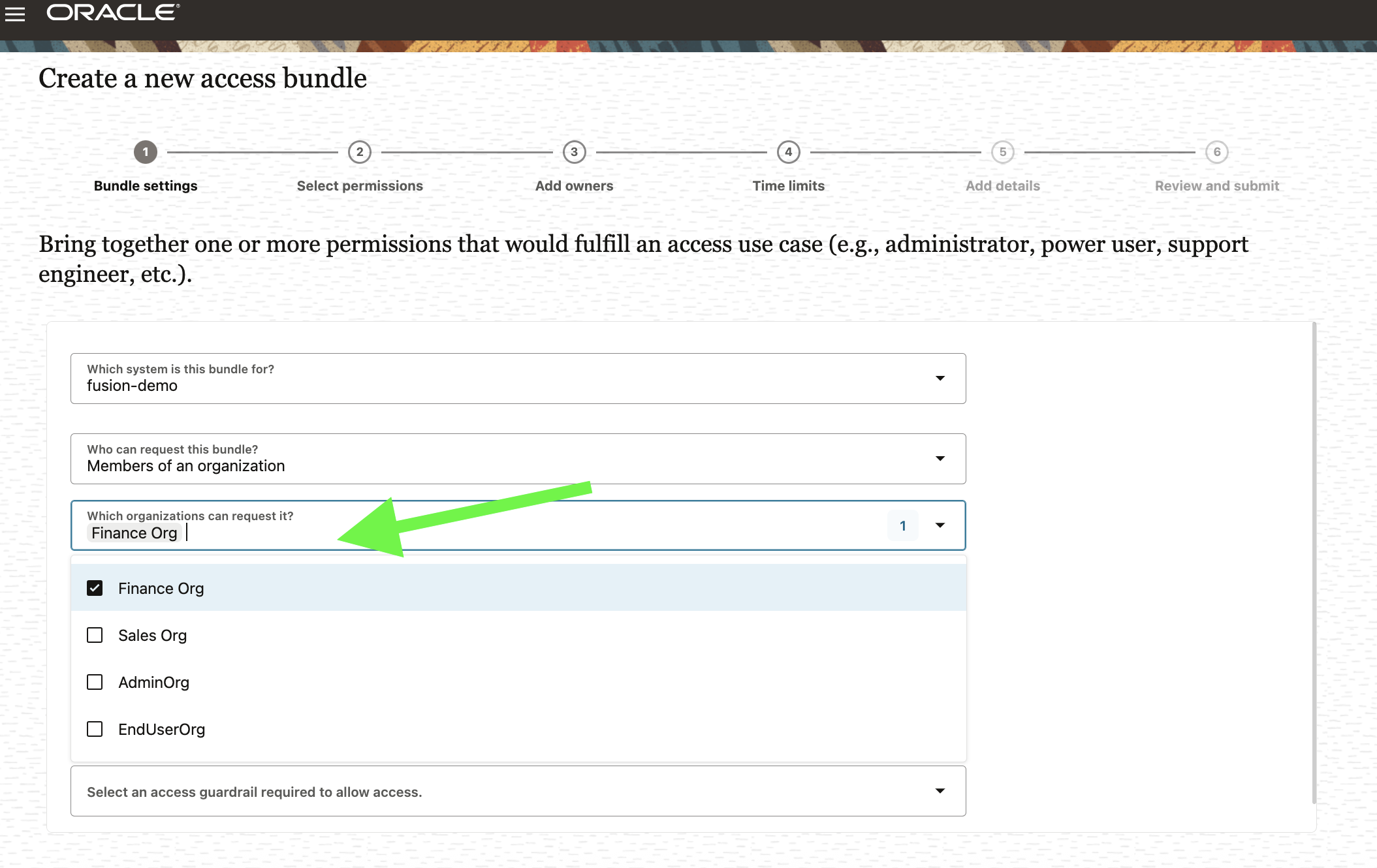
This means bundles are no longer just permission sets; they become context-aware entitlements, tied to the right organizational boundaries.
Organizational Membership as the Control Plane
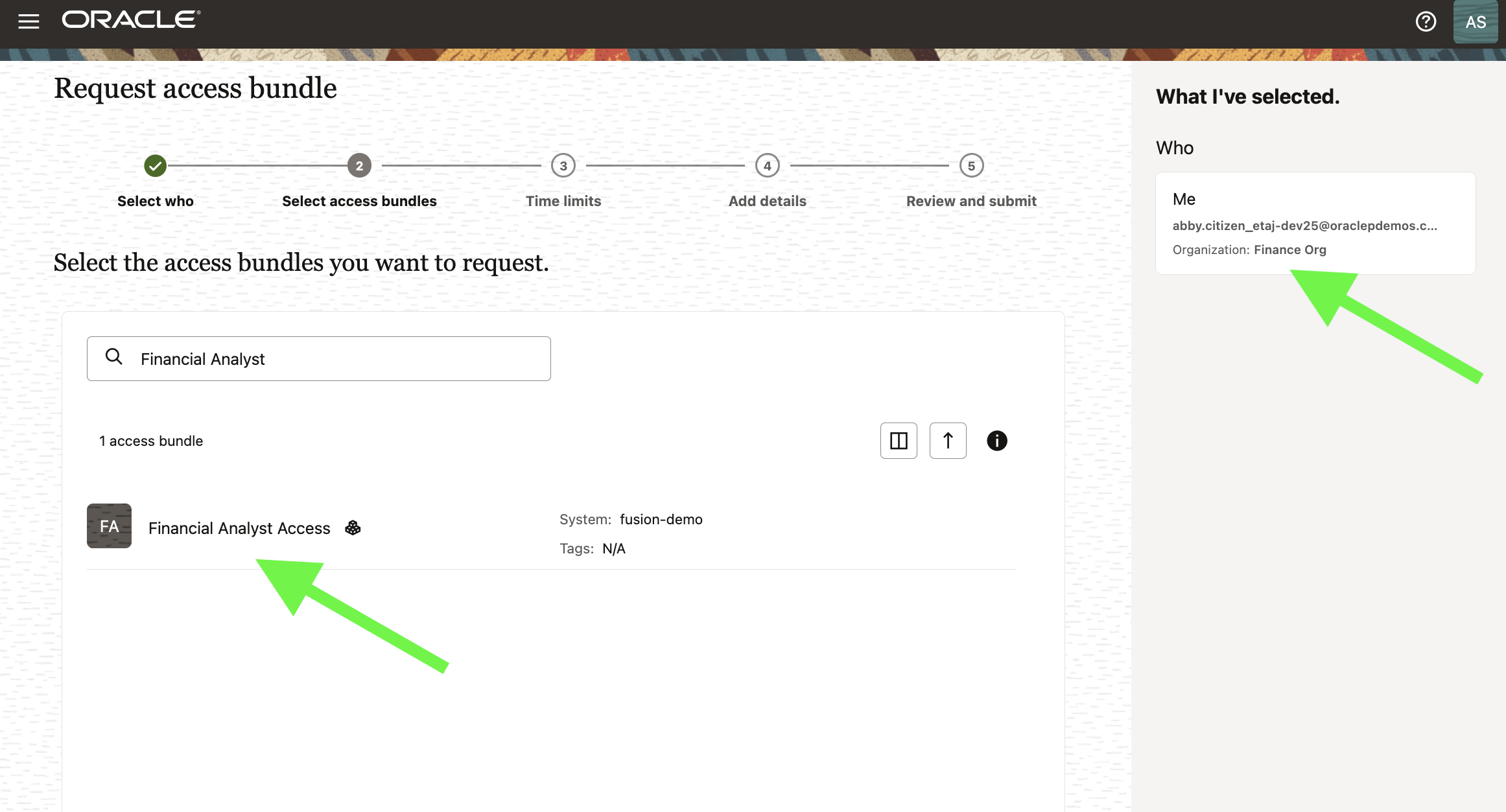
The strength of this feature lies in how organizations are defined and how users are assigned to them. In our example, Abby is a member of the Finance organization.
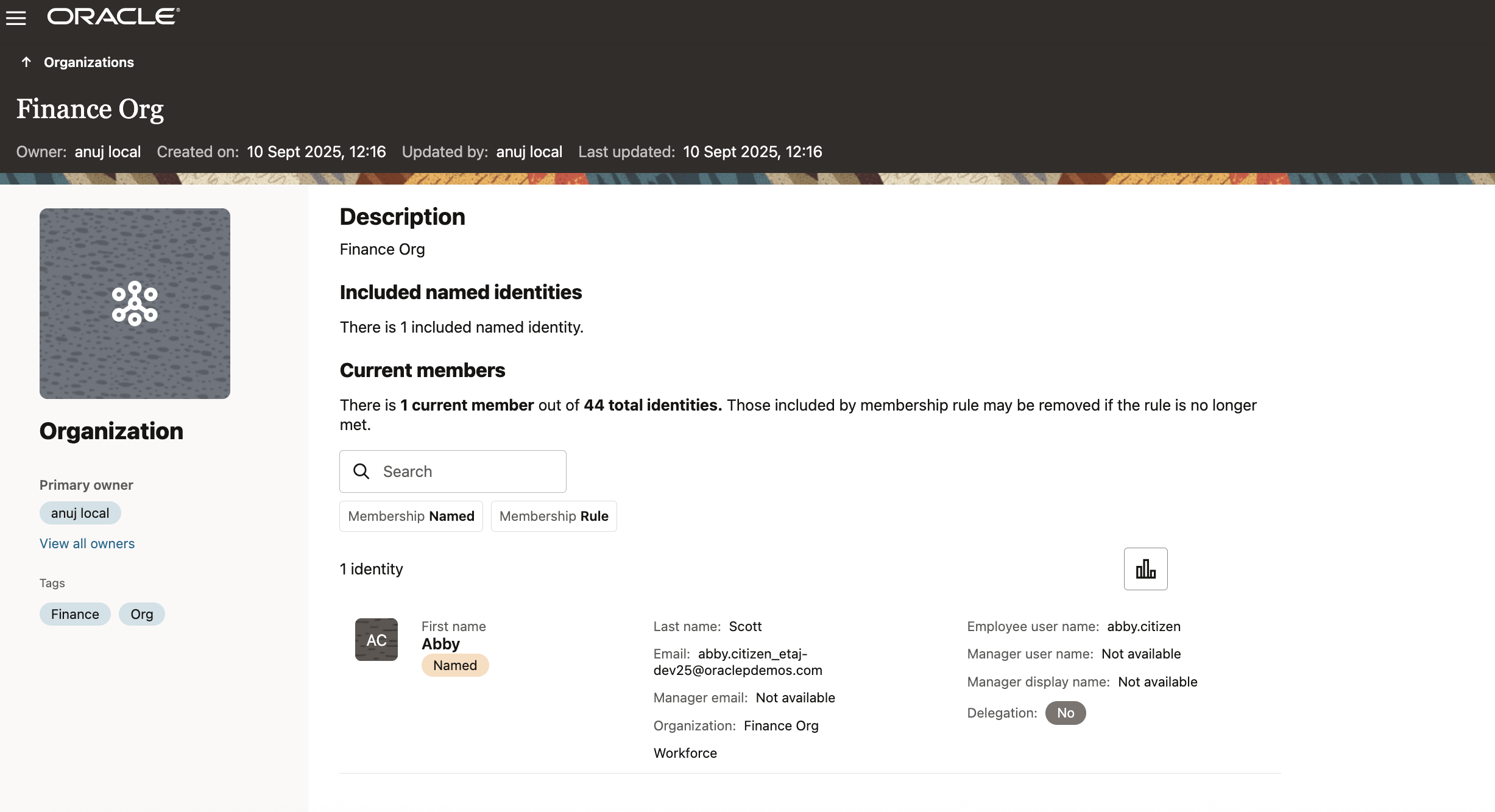
That membership is what drives entitlement visibility. Membership can be determined by membership rules as well as by named user inclusion. Abby doesn’t need to worry about ‘choosing wrong’ or raising an irrelevant request, because the catalog shapes itself automatically based on her organization.
The User Experience in Practice
When Abby goes into the self-service catalog, she finds the Financial Analyst bundle available for request, because it is scoped to Finance org.
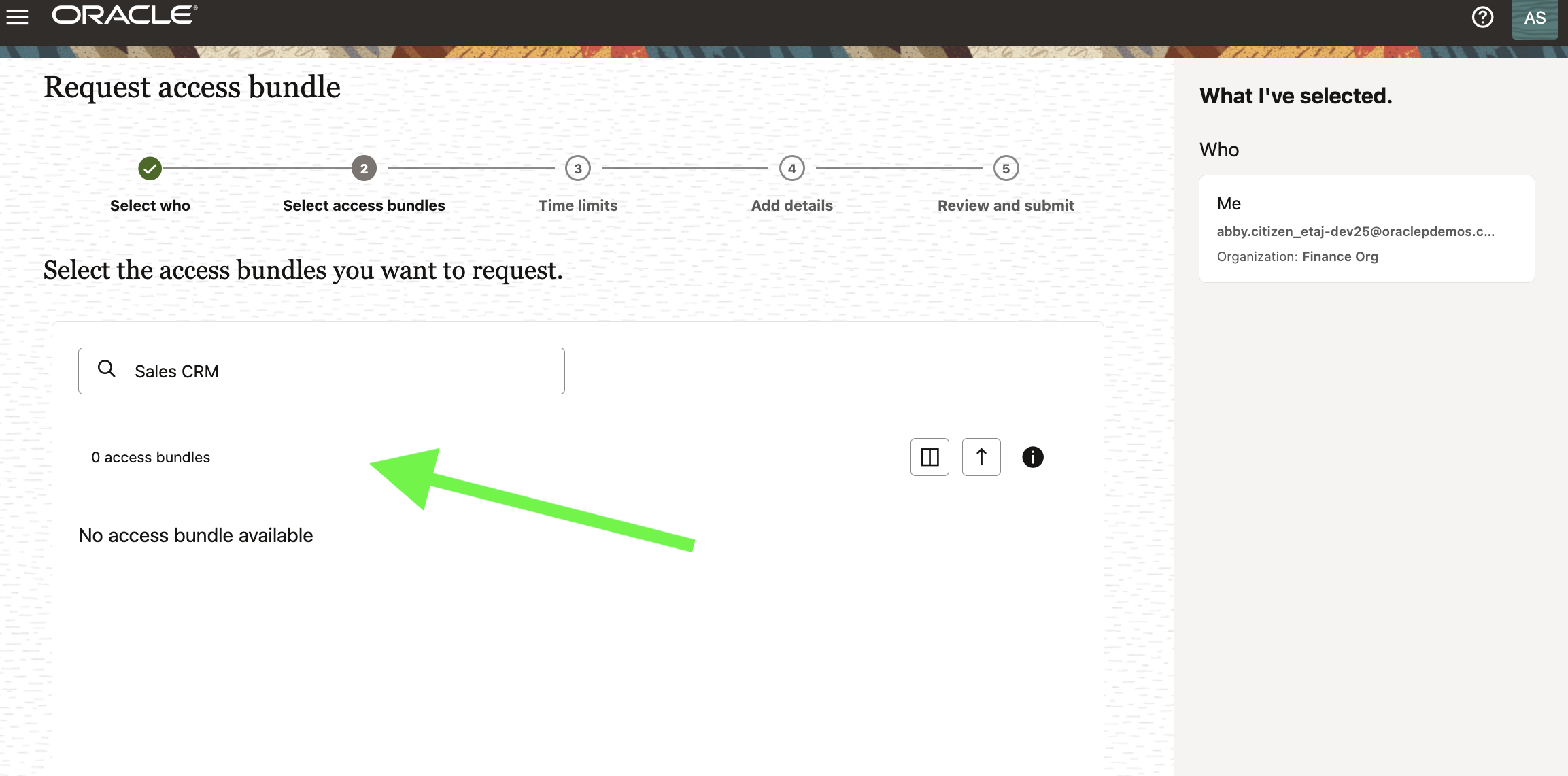
On the other hand, the Sales CRM bundle is invisible to her. It simply doesn’t appear, because it was published only to the Sales org.
From a user perspective, this is a cleaner, more relevant experience. From a governance perspective, it’s tighter isolation and fewer inappropriate requests.
Looking Beyond the Feature
From a B2E perspective, organization-scoped access bundles simplify internal governance. Finance employees shouldn’t see Sales entitlements, and Sales staff shouldn’t have payroll permissions on their radar. Each department has its own scope, making access cleaner, more intuitive, and easier to audit.
From a B2B perspective, access bundle scoping reinforces tenant boundaries. Customers want assurance that their users cannot see or request entitlements meant for other customers. This separation builds trust and helps satisfy compliance requirements around access segregation and data protection.
From a business perspective, the benefits are tangible:
- Audit readiness: clear evidence of least privilege and access isolation.
- Operational efficiency: fewer irrelevant requests, less back-and-forth, and reduced approval overhead.
- User adoption: a catalog that reflects reality, not clutter, which encourages greater use of self-service.
Closing Thoughts
Organization-scoped access bundles are a powerful step forward in strengthening access governance. By aligning entitlements with organizational boundaries, they ensure that users only see and request what is relevant to them.
This capability directly supports business trust, regulatory compliance, and operational efficiency. Whether in a multi-tenant SaaS model or a large enterprise with multiple departments, access bundle scoping enforces clean separation, reduces risk, and creates a more user-friendly governance experience.