
OCI has evolved its Load Balancer service! The fixed-shape options (also known as dynamic or predefined bandwidth) are being phased out, making way for the OCI Flexible Load Balancer, which offers more scalability, adaptability, and future-ready features.
Why the Change?
The move to flexible load balancers ensures that customers benefit from:
• Adjustable bandwidth tailored to your workload
• Advanced scaling to handle dynamic traffic patterns
• Support for the latest features, including IPv6 and higher throughput
What This Means for You:
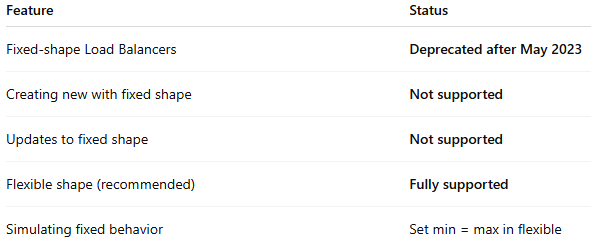
• New Deployments: All new load balancers must use the flexible shape model, where you simply define a minimum and maximum bandwidth.
• Existing Fixed LBs: Your current fixed-shape load balancers (10/100/400/8000 Mbps) will continue to run and be supported, but new enhancements will only be available with flexible LBs.
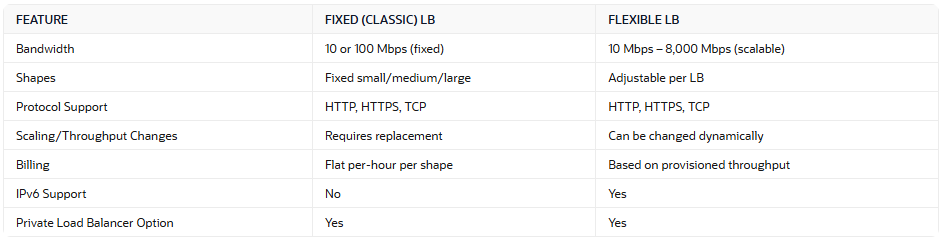
A comparison between Fixed and Flexible LB’s:
Recent Updates:
• Flexible LBs provide higher throughput, IPv6 support, and dynamic scalability.
• The Classic/Fixed LB’s remain supported, but most new features are added only to Flexible LB’s.
• You can migrate from Fixed to Flexible by creating a Flexible LB and updating your configurations; there’s no automated migration tool.
What is supported vs What is not supported:
Migrating from Fixed to Flexible:
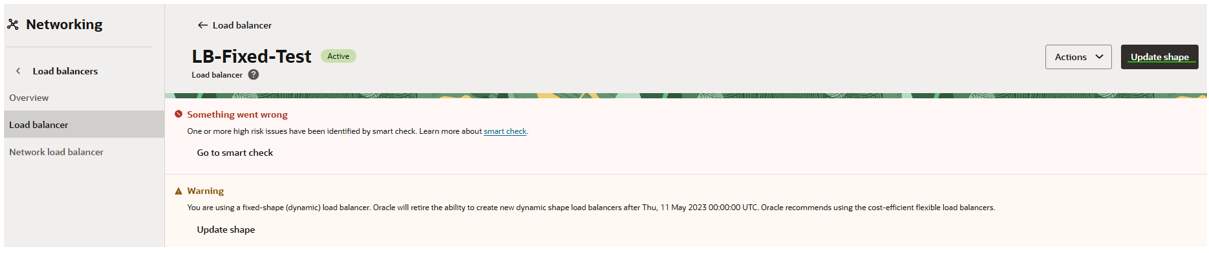
The easiest method is to click on “Update shape” as shown below:
Then click on “Use a flexible load balancer” option.
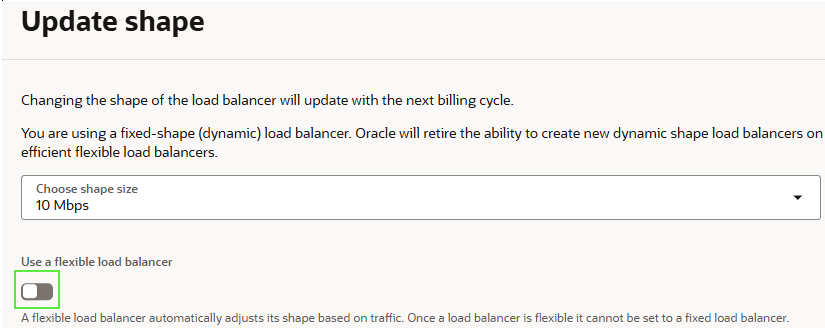
Once it is enabled, define minimum and maximum bandwidth, and save changes.
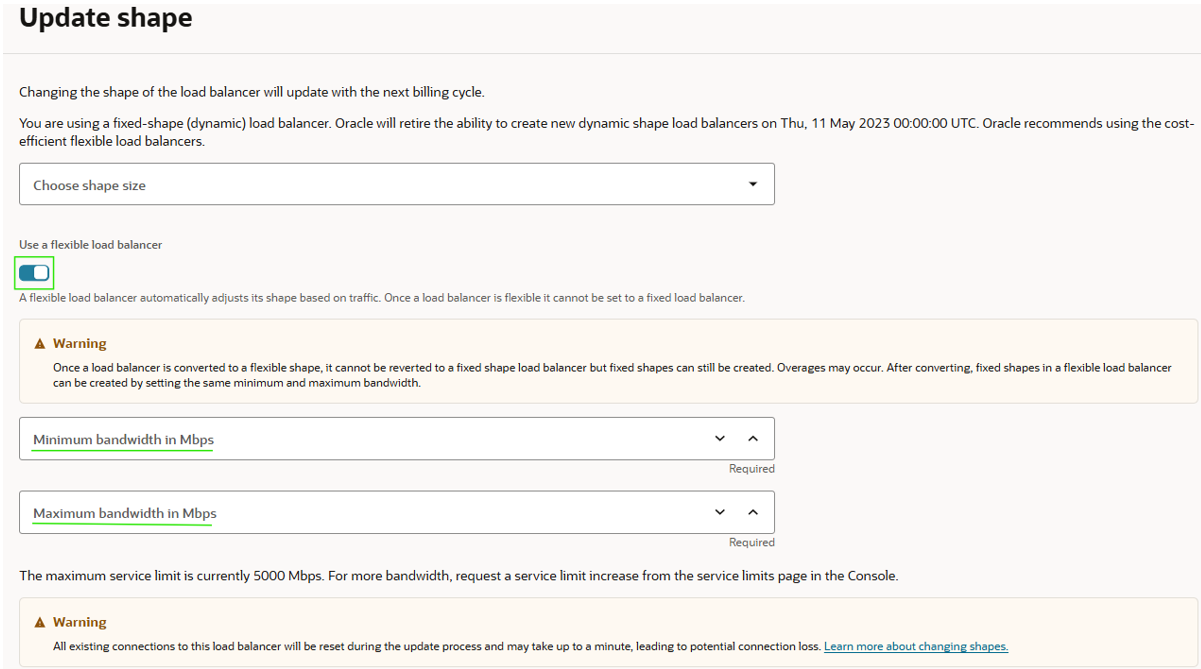
Please note that once the changes are made, it is not possible to revert the changes.
Does OCI provide support Fixed LB’s for the existing ones?
OCI will continue to support troubleshooting and maintenance for existing fixed-shape load balancers. However, the clear recommendation is to migrate to flexible to unlock full functionality and align with best practices.
Summary:
The OCI Flexible Load Balancer is now the go-to option for all new deployments. It offers more control, scalability, and support for modern workloads. Migrating from fixed to flexible ensures you’re future-proof and ready to take advantage of new innovations.