
Bridging the Gap: AI and Business Applications with Model Context Protocol
The AI Race and Its Limits
We are living in an era where artificial intelligence is at the forefront of nearly every conversation. From generating text and images to producing videos and even writing code, AI has shown remarkable progress in creative and technical domains. However, when it comes to running a business, the real work happens within business applications. These applications—whether ERP, CRM, HR, finance, or custom solutions—serve as the backbone of transactions, workflows, and enterprise decision-making. Yes, AI can write code for business applications and even orchestrate business workflows, however when it comes to executing business logic or transactions, that work must still happen inside the business application itself.
This is where the fundamental gap lies: AI needs a reliable way to communicate with business applications. Without bridging this gap, AI cannot fully unlock its potential in enterprise environments.
Enter Model Context Protocol (MCP)
Recognizing this challenge, Anthropic introduced the Model Context Protocol (MCP)—an open ecosystem designed to allow AI models and business applications to interface seamlessly.
MCP has quickly gained traction across the industry because it provides:
- Standardization – A common way for AI to talk to diverse business systems.
- Extensibility – Support for different use cases and applications.
- Openness – An ecosystem where vendors and developers can contribute MCP servers to connect new systems.
Oracle’s MCP Adoption
Oracle has embraced MCP in a significant way, embedding it across multiple product lines:
- Integration Cloud: Oracle extended MCP support into Oracle Integration Cloud, simplifying orchestration across business processes that span multiple applications. Link
- Databases: Just last month, Oracle released MCP servers for its flagship database technology, further expanding the AI-to-enterprise integration landscape.
Link
This adoption highlights a broader industry trend: AI’s effectiveness in enterprises will be measured not only by its generative capabilities but also by how well it can execute actions within core business systems.
Learning More About MCP
For those looking to explore MCP further, there are excellent resources that provide a deep dive into the protocol and its usage. Instead of repeating that content here, I recommend starting with these two foundational guides:
Both provide step-by-step explanations and are great entry points for anyone interested in understanding MCP’s architecture and capabilities.
My Contribution: MCP for OCI Identity Domain
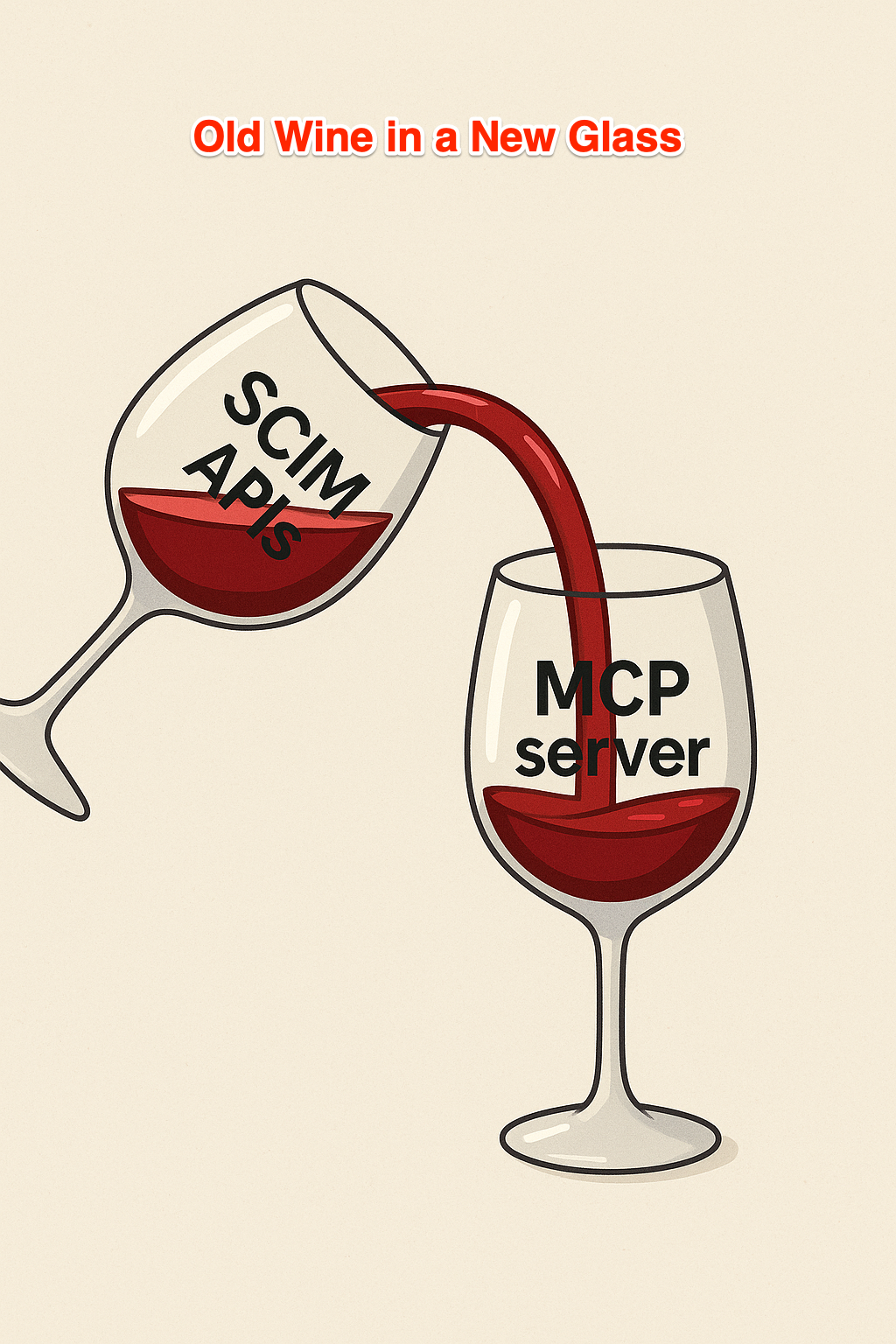
As part of my exploration into MCP, I developed an MCP server for Oracle Cloud Infrastructure (OCI) Identity Domain—Oracle’s IAM (Identity and Access Management) service. I won’t elaborate on my thoughts regarding MCP servers in detail. A picture is Worth a thousand words. Look at the image at the beginning of the blog.
This MCP server enables AI to interact with OCI IAM, bridging identity management with AI-driven orchestration. Developers and enterprise teams can leverage it to explore scenarios where AI needs to manage or query identity information securely.
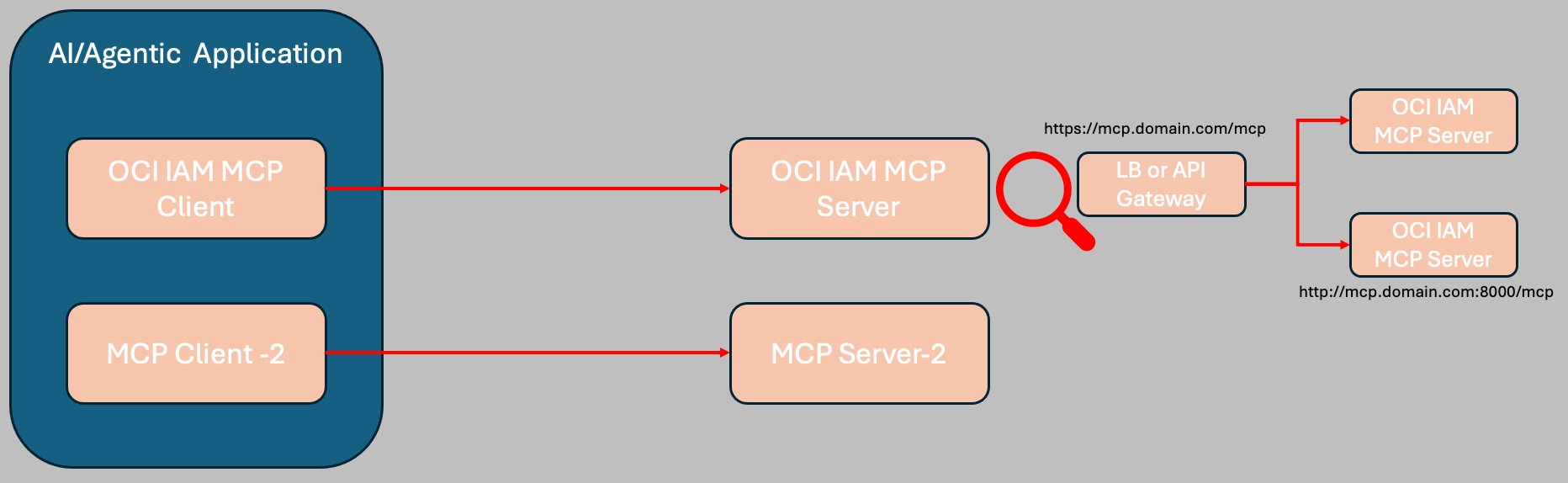
The code and detailed usage instructions are available on my GitHub repository:
👉 OCI MCP Server on GitHub
You can use the MCP server and extend it to add more tools and resources.
Closing Thoughts
AI is transforming industries, but for it to become a true enterprise enabler, it must not only generate insights but also execute meaningful actions within business applications. The Model Context Protocol (MCP) is a critical step toward this future. With vendors like Oracle adopting MCP across their product lines and with open contributions like the OCI IAM MCP server, we are moving closer to an ecosystem where AI can act as an active business participant, not just an advisor.
The journey has just begun—but the possibilities are immense.
Resources
- https://blogs.oracle.com/ai-and-datascience/post/unleashing-the-power-of-mcp-with-oracle-oci-genai
- https://blogs.oracle.com/integration/post/oracle-integration-ai-strategy
- https://blogs.oracle.com/ateam/post/getting-started-with-model-context-protocol-concepts-and-code-part-1
- https://blogs.oracle.com/ateam/post/getting-started-with-model-context-protocol-concepts-and-code-part-2