

Introduction
This blog aims to introduce the various integration patterns to ingest Oracle Fusion SCM Order Management (OM) Order status updates for downstream processing.
Overview
There are various use cases in the SCM world where Order status updates are required for further processing.
- Inventory – Manage optimum inventory levels by reacting to real time order status updates
- Logistics – Better planning and tracking of deliveries using Real time Order status updates
- CX – 360 degrees customer experience by updating CRM systems with real time order status
These are just to name a few high level SCM use cases involving Order Status updates.
As orders pass through various stages of fulfilment the orders pass through various statuses. Further, individual lines and fulfilment lines also pass-through various stages and status.
- Sales Order status
- Order Line Status
- Fulfilment line status
- Orchestration Process Status
Doc below gives a good overview of the various statuses in Order management lifecycle
Doc – Order Management Statuses
Patterns:
How can we consume and act on order status updates as orders and order-lines progress through order orchestration? Mainly 2 patterns can be employed for consuming order status updates generated by Fusion SCM Order Management
- Push model using OM Connectors
- SCM OM event-based pattern using Oracle Integration cloud
Details:
Order Management Connectors based approach:
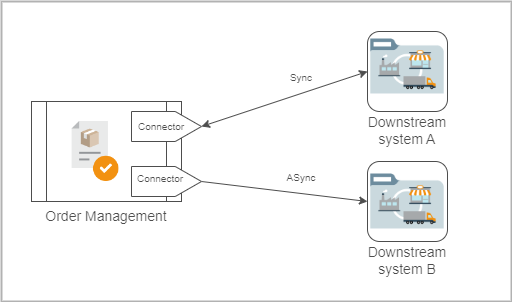
OM enables users to create and manage connectors which act as interface to various end systems for OM to interact during the Order Orchestration and extensions. These are based on a push model where Order Management delivers status updates to external endpoints that are configured using connectors. OM connectors essentially encapsulate the authentication and end point address details of upstream and downstream systems.
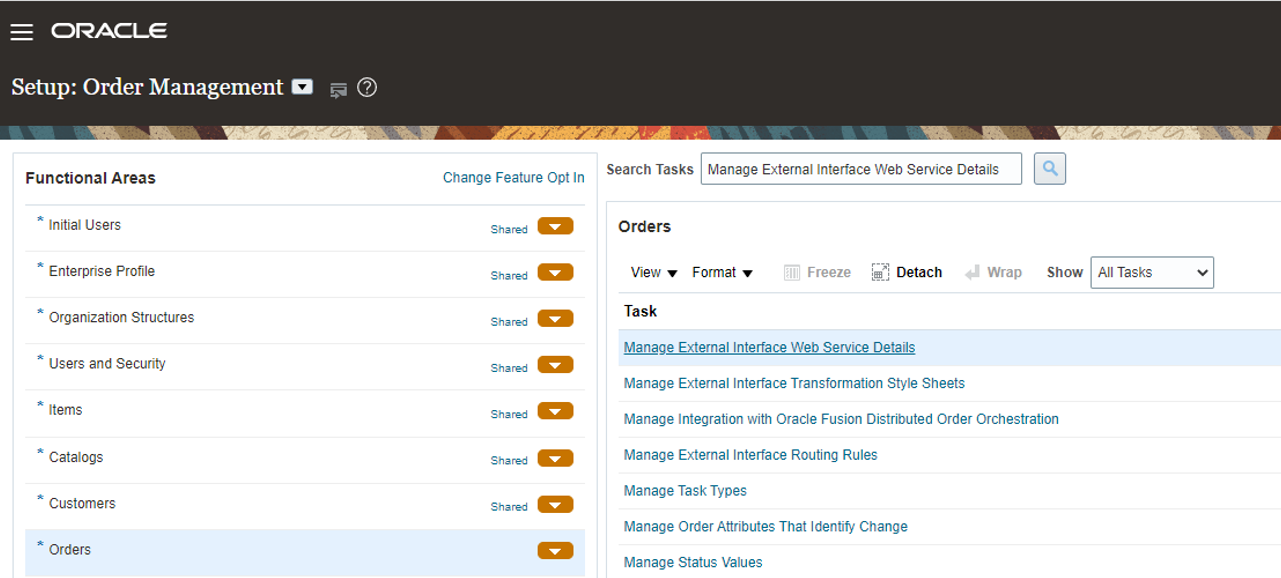
Order Management connectors can be configured from Setup and Maintenance work area as shown
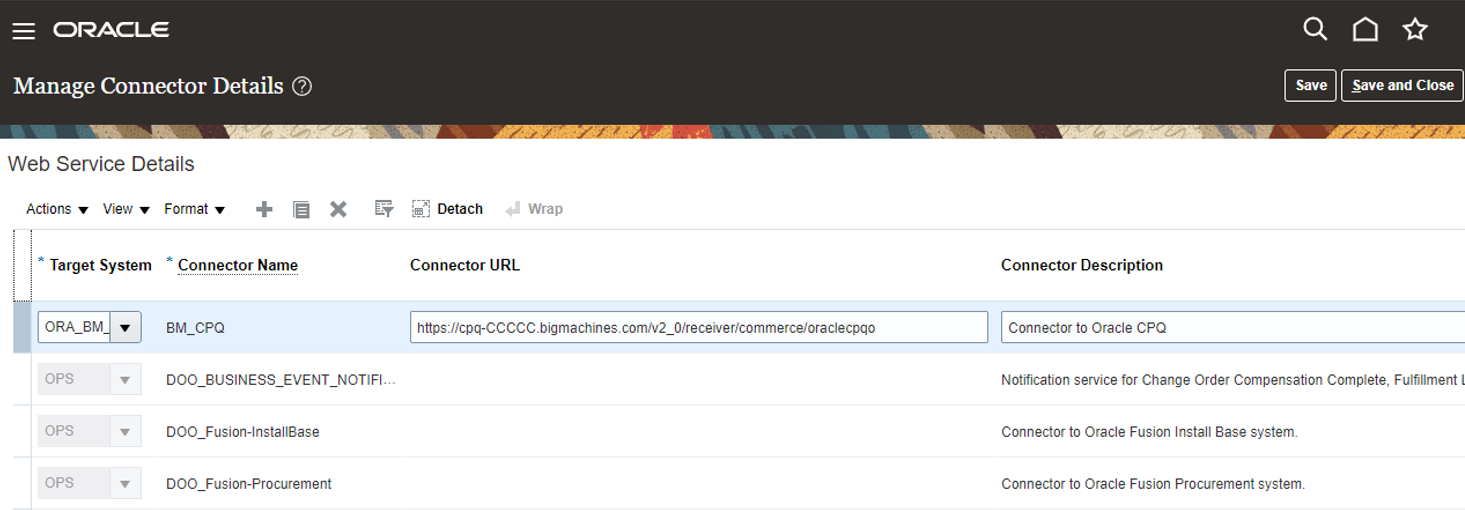
Refer to the below Doc for more details for managing connectors with various end systems.
OM business events can notify Integration Cloud or OM connectors when pre-configured changes occur on an order or fulfillment line. Refer Doc here for sending event notifications to connectors. The event trigger configurations are performed using “Manage Business Events Trigger Points” from Setup and Maintenance as shown below.
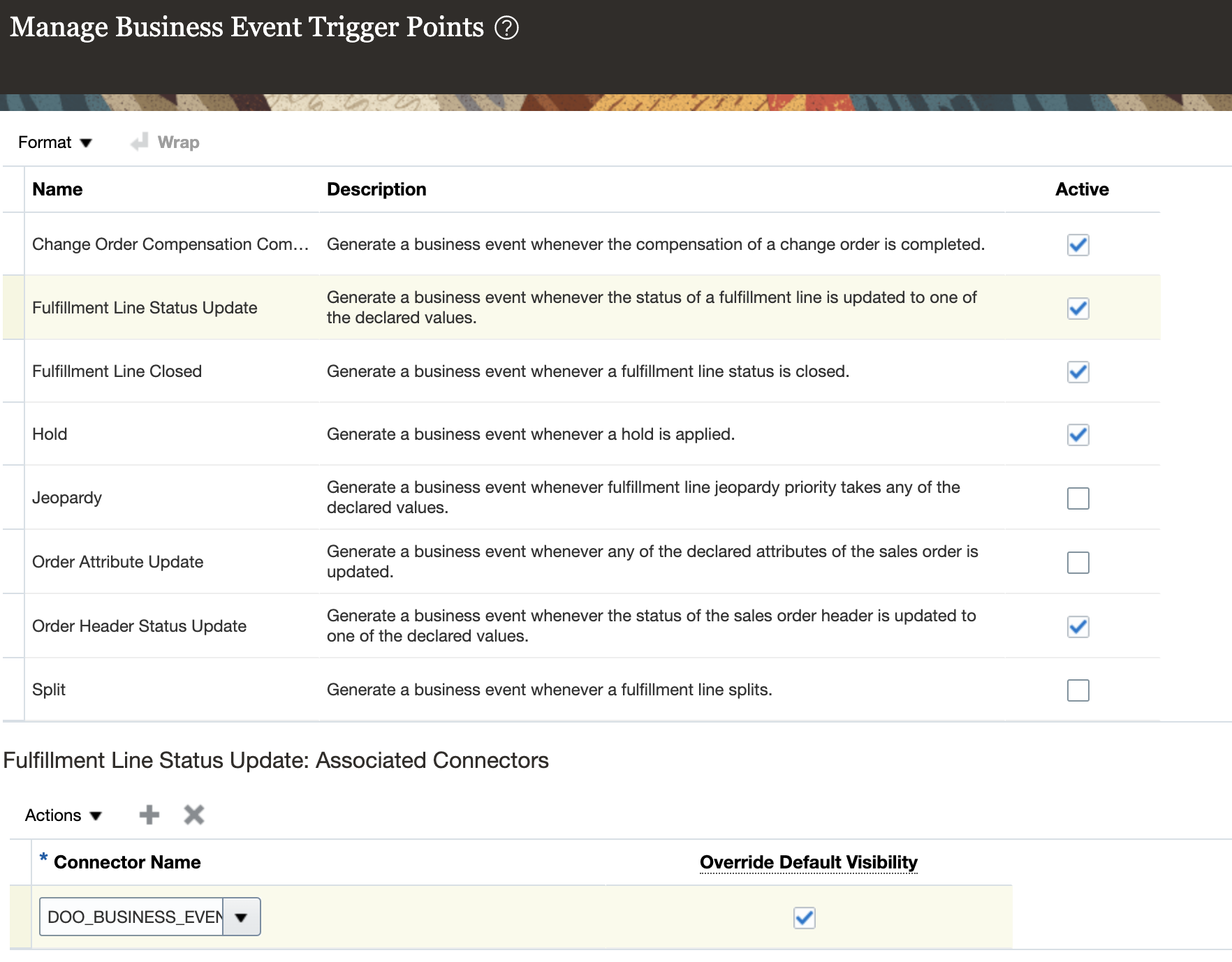
However, note that Integration Cloud is preferred for event delivery from OM. When connectors are used, additional Webservice development is required in external systems to receive the events from connectors. Whereas, Integration Cloud helps standardize and abstract this using ERP/SCM Cloud adapter event subscription.
Connector based approach – pros and cons
Let us quickly look at the pros and cons of using OM connectors for end system integration, specifically the Order status updates use case which we are interested in currently.
Pros:
- Push model with OM delivering status updates directly to external endpoint
- Does not require a managed integration like Integration cloud
- Ability to retry failed delivery of updates to external systems as part of OM Error Recovery ESS job
Cons:
- Connectors can only connect to SOAP endpoints
- Additional Webservice layer to be developed by external systems to recieve OM events from connectors
- Point to point integration and hence lacks traceability and diagnosis of status updates between OM and target systems
- No fine control as OM recovery job will attempt to redeliver all failed status updates and not specific updates if needed
- Order status event delivery to connectors is preferred only for Oracle Global Trade Management (GTM) and Oracle Transportation Management (OTM) integration. For other event based integrations use Integration Cloud (see next section for details)
Error Recovery ESS Job Doc – Fix Errors in all Sales Orders
Oracle Support Note – FA: SCM: OM: How To Recover Orders Which are in Error? (Doc ID 2636374.1)
SCM OM Events. Fusion SCM Events Handling using Oracle Integration
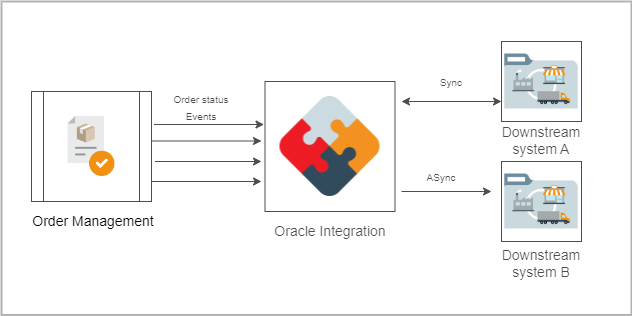
This pattern enables consuming Order status updates as events so they can be asynchronously processed downstream. This is made possible using Oracle Integration cloud.
Integrations created within Oracle Integration are capable of consuming Fusion SCM OM events. Fusion ERP/SCM cloud adapter connection configured as a trigger can subscribe to and consume events from Fusion SCM OM. Integration flows using the connection as trigger can be used to implement necessary business logic for responding to these Order Status updates in real time
Refer to the Oracle Integration product links for more details – OIC Gen2 and Oracle Integration 3
Refer to this A-Team blog which walks through the creation of event based SCM integration using Oracle Integration – Event based Streaming Integration for SCM Items Load
Doc –Supported SCM and Procurement Business Events
Events based approach – pros and cons
Pros:
- Managed Integration provides visibility, traceability and monitoring of status updates from OM to downstream system using OIC Monitoring
- Uses Integration cloud adapter framework to deliver events reliably using event subscriptions
- Custom Error handling and retries logic can be implemented using Oracle Integration
- Ability to park and process OM events when downstream systems are down using parking lot pattern in Oracle Integration
- Can integrate with variety of downstream interfaces including SOAP and REST using OIC adapters
Cons:
- Additional PaaS component – Oracle Integration required
Conclusion
We have seen the various options of integrating downstream applications with Fusion SCM Order Management for processing order status updates in real time.
References:
- Doc – Connectors in OM
- Doc – Fix Errors in all Sales Orders
- Blog – Event based Streaming Integration for SCM Items Load
- Doc – Order Management Statuses
- Oracle Support Note – FA: SCM: OM: How To Recover Orders Which are in Error? (Doc ID 2636374.1)
All Fusion SCM doc links refer to 23A release which is the latest during the publish of this blog. Do refer to corresponding latest release documentation