Oracle announced recently the Fusion Data Intelligence Platform, the next generation data, analytics, and AI platform for Fusion Cloud Applications customers and an evolution of Fusion Analytics Warehouse. The Fusion Data Intelligence Platform (FDIP) will provide users with curated data, ready-to-use analytics, and AI-powered intelligent applications that enable smart decisions and directed actions for optimal business outcomes. It is an evolution of the existing Fusion Analytics offering, with a dramatically increased scope and vision.
The Oracle Fusion Data Intelligence Platform includes the following out-of-box capabilities that will enable Oracle Fusion Cloud Applications customers to derive the most value out of their data.
360-Degree Data Models: Will help business users understand how their data relates to business processes and goals by providing them with a clear and consistent representation of their organization’s data. By providing a collection of conformed data models based on Oracle Fusion Cloud Applications data and other data sources, the platform will provide organizations with a 360-degree view into various aspects of their business—customers, products, accounts, suppliers, and employees.
Prescriptive AI/ML Models: Will help organizations solve specific business problems by using out-of-box AI/ML models, such as workforce skills assessment and customer payment forecasting, to automate time-consuming tasks and free up employees to focus on more strategic tasks. In addition, large volumes of data can be quickly analyzed, uncovering valuable insights and patterns to identify opportunities for business growth and efficiency.
Rich Interactive Analytics: Will help business users interactively explore and visualize their data using out-of-box dashboards, reports, and KPIs. In addition, they can use Analytics Cloud capabilities like natural language query, auto insights, and mobile apps to gain quick access to data and insights.
Intelligent Applications: Will help organizations make more informed decisions faster by leveraging underlying prebuilt data models, AI/ML models, and analytics content. These applications will go beyond insights and recommend intelligent actions that improve business outcomes.
Oracle’s vision for FDIP is detailed in this blog.
FDIP offers administrator and power users analytics capabilities to derive insight from the data pipelines executions, including data augmentations, custom data usage or user usage tracking.
It also provides capabilities for implementers or even functional users to build reconciliation dashboard to compare data in Fusion SaaS source records with data extracted and transformed in FDIP ADW, using the Data Validation features.
This blog provides an overview of the FDIP Common Subject Areas enabling FDIP users to derive insight described above. This blog also share sample FDIP OAC data vizualisations based on these Common Subject Areas.
* Have access to an Fusion Analytics Instance (OAC, ADW) with Administrative privileges
Common Subject Areas Overview
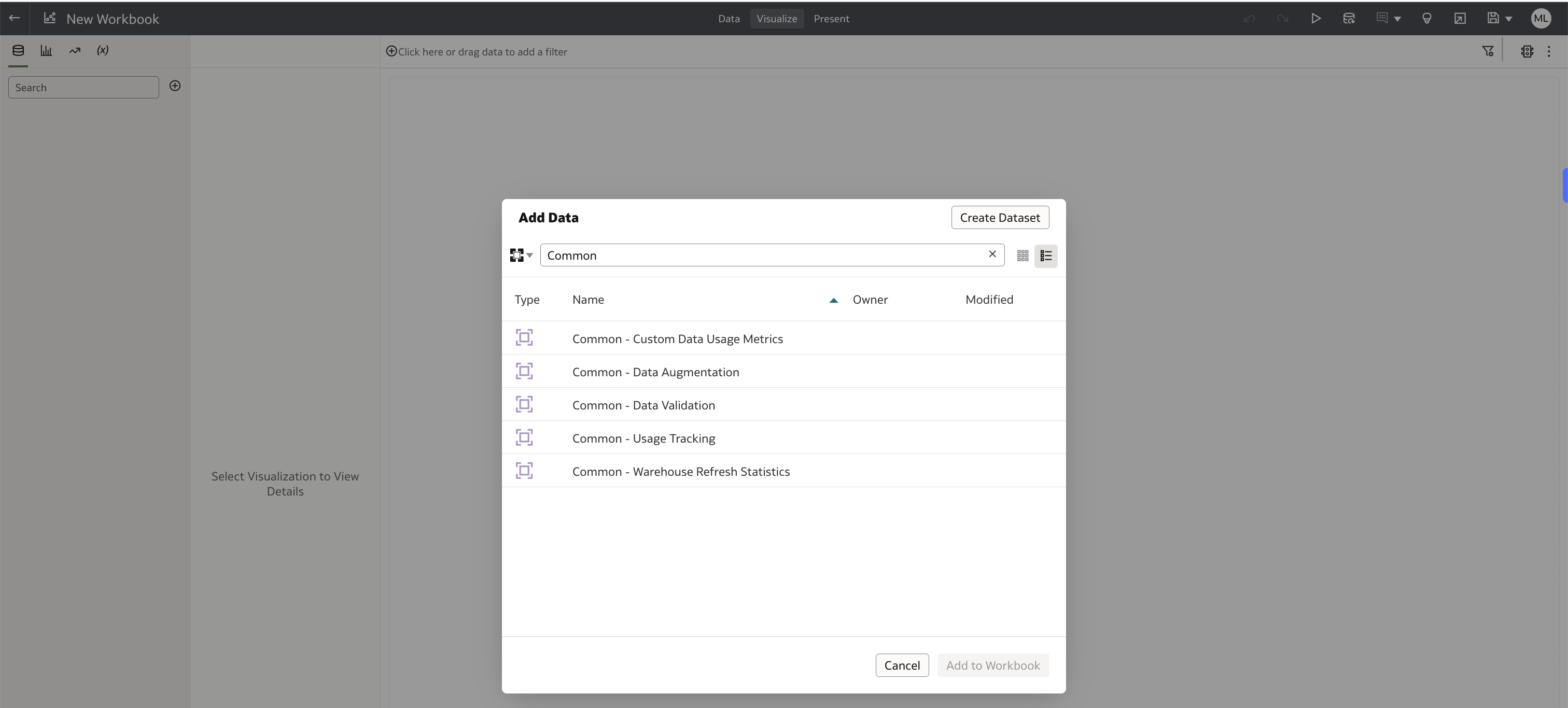
As of version 23R4, FDIP offers five Common Subject Areas
Custom Data Usage
Data Augmentation
Data Validation
Usage Tracking
Warehouse Refresh Statistics
Figure 1: FDIP Common SAs
Custom Data Usage Subject Area
The Custom Data Usage Subject Area offers two main dimensions : Time and Tenant Metric Attributes and one single fact metric that is the custom Storage Usage in GB, as described in the following figure:
Figure 2: FDIP Common SA – Custom Data Usage
Data Augmenation Subject Area
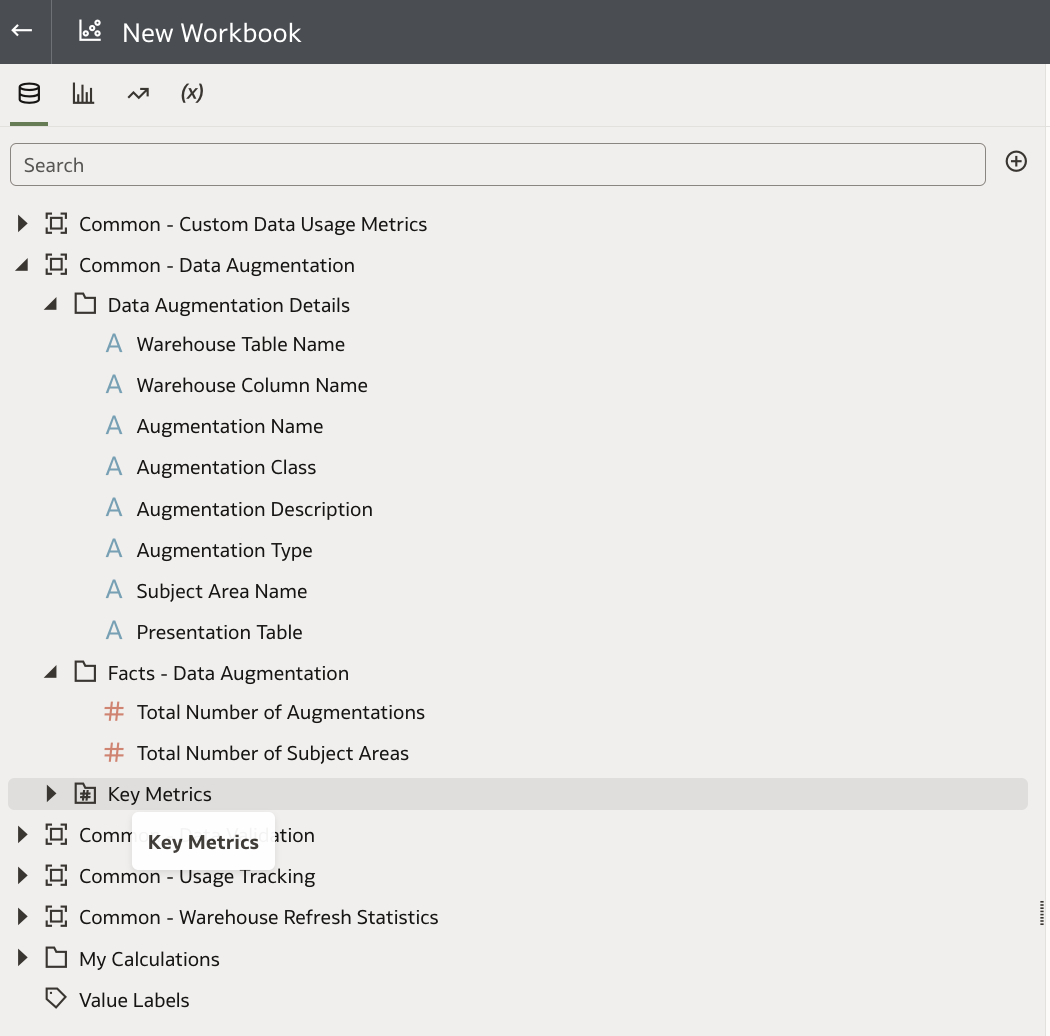
The Data Augmentation Subject Area offers Data Augmentation Details dimension and two metrics : Total Number of Augmentations and Total Number of Subject Areas as shown in the following figure:
Figure 3: FDIP Common SA – Data Augmention
Data Validation
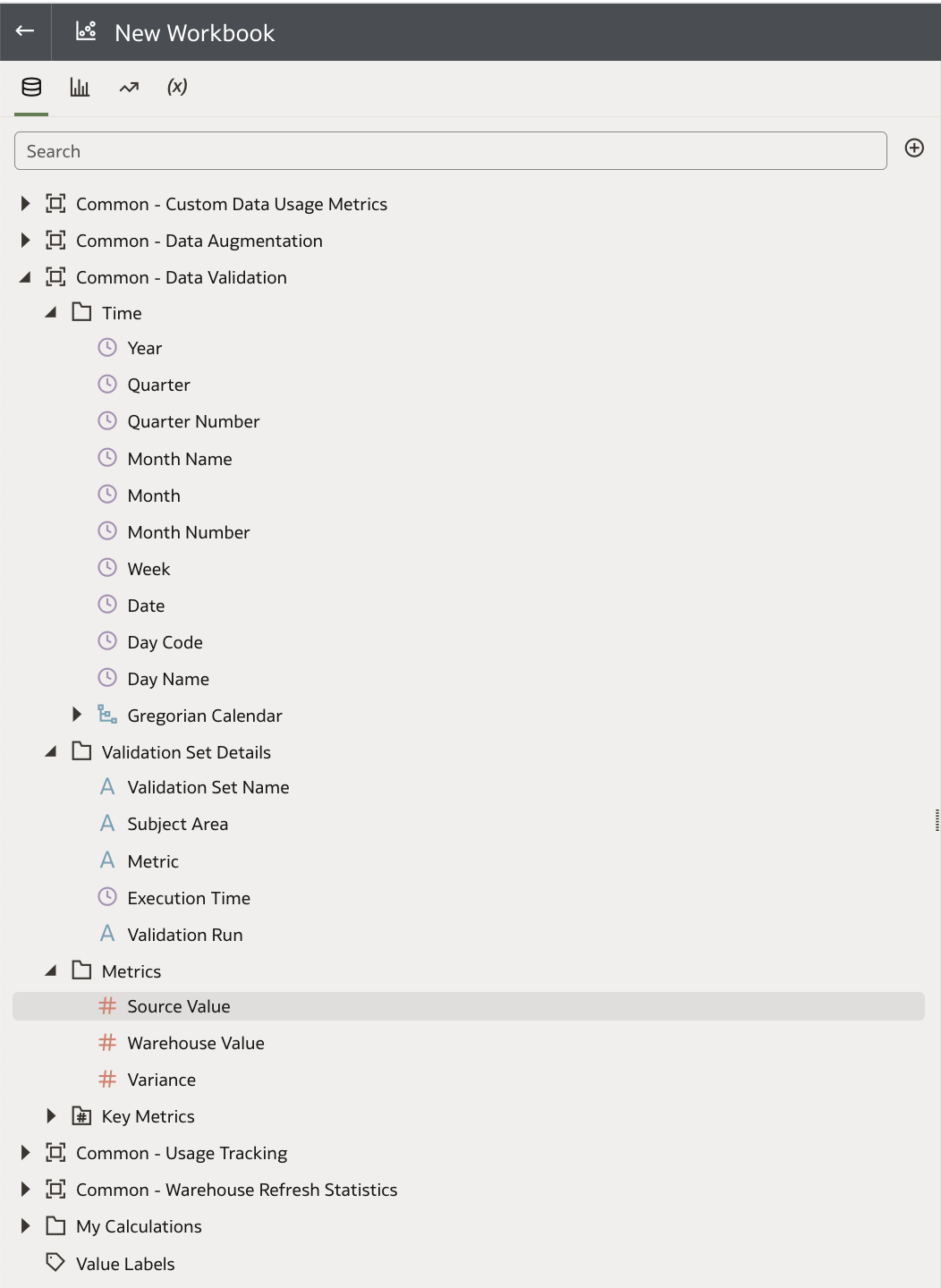
The Data Validation Subject Area offers two main dimensions : Time and Validation Set Details. And for the metrics, it provide Source Value, Warehouse Value as well as the Variance.
Figure 4: FDIP Common SA – Data Validation
In order to use Data Validaton, the following prerequisities must be met
Ensure that you can access the Oracle Transactional Business Intelligence instance and run queries.
Ensure that you have the same data security privileges in Oracle Fusion Analytics Warehouse instance and the Oracle Transactional Business Intelligence instance.
Ensure that you’re assigned the Integration Specialist Group in Oracle Fusion Analytics Warehouse to access the Common folder in Oracle Analytics Cloud and to view the output of the data validation project.
Create a user, such as MyFAWValidationUser, to validate the extracted data as described here.
Create a custom BI Abstract role and associate it with an applicable user, such as MyFAWValidationUser, whose credentials you want to provide for data validation.
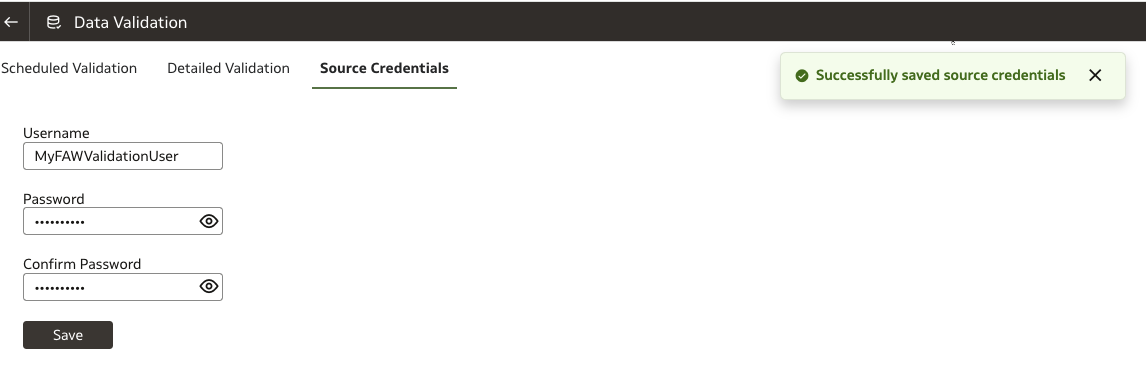
In Oracle Fusion Analytics Warehouse, on the Source Credentials tab of the Data Validation page, provide the credentials of the applicable user, such as MyFAWValidationUser.
Figure 5: FDIP Common SA – Data Validation Credentials
In order to use Data Validaton, the following prerequisities must be met
The Data Validation Subject Area requires additional confirguation that is described here .
To acces Data Validation configuration, in FDIP
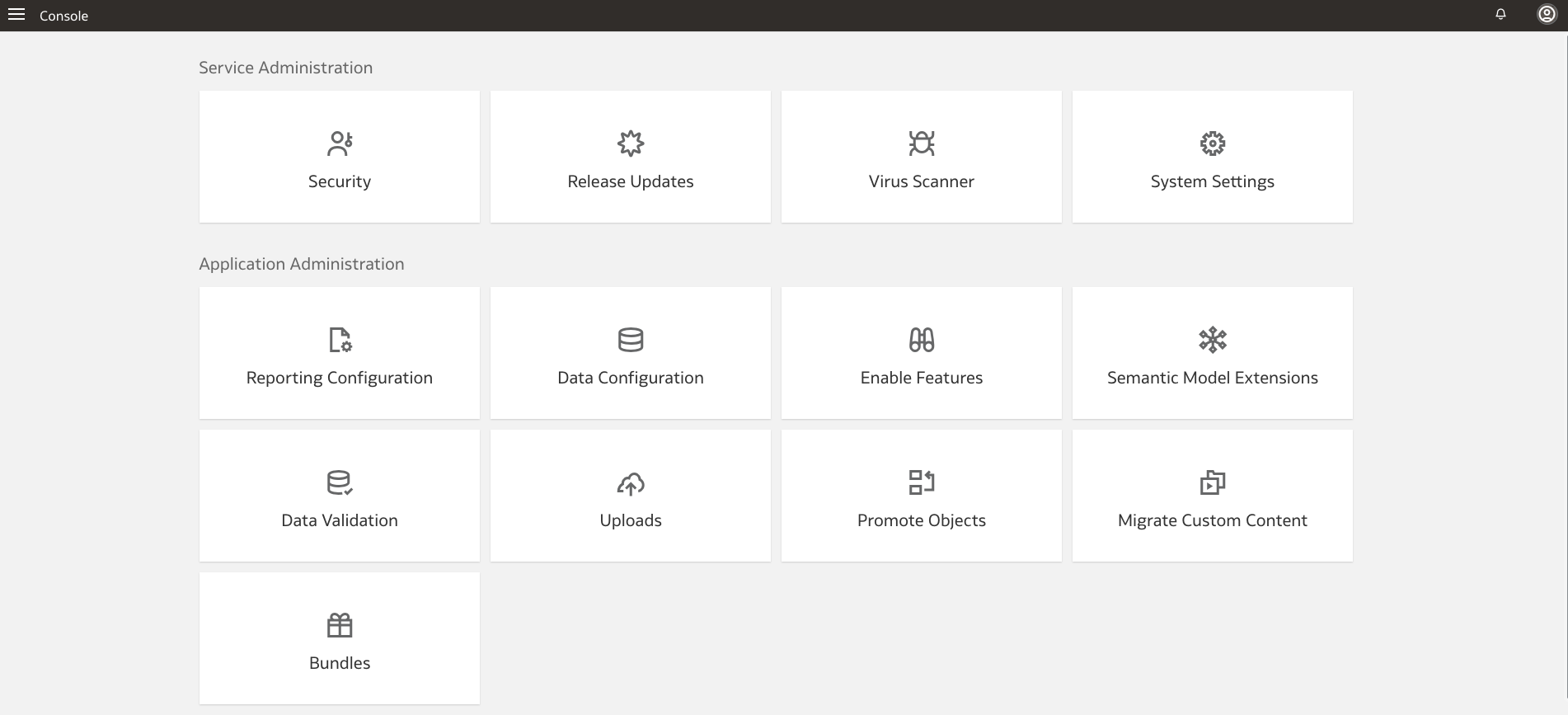
Navigate to Console > Data Validation
Figure 6: FDIP Common SA – Data Validation Navigation
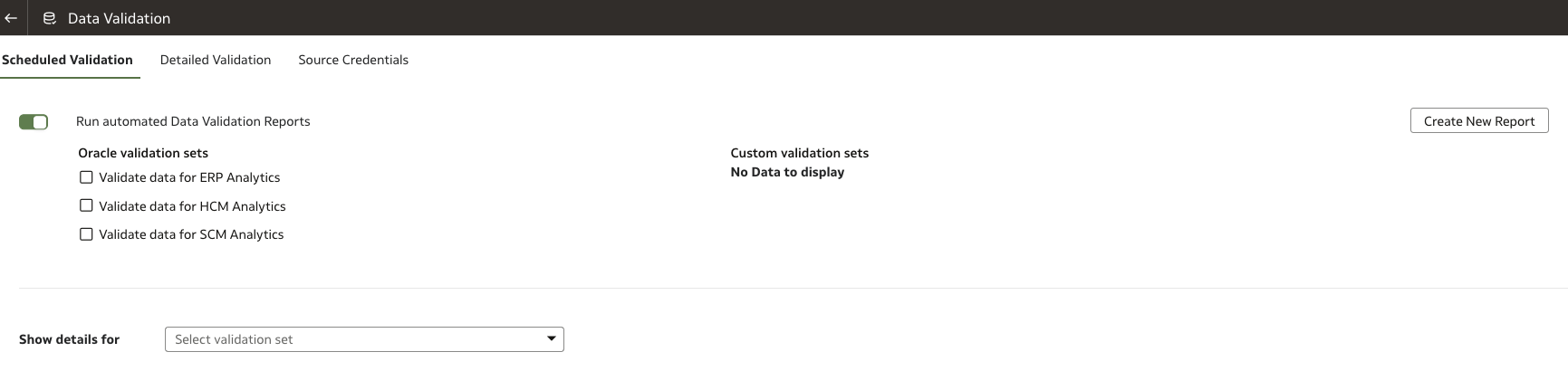
To create scheduled validation (Weekly, Monthly or Quarterly), in the Scheduled Validation, create a new Validation Set using the Create New Report button. Then follow instructions here.
Figure 7: FDIP Common SA – Data Validation Scheduled
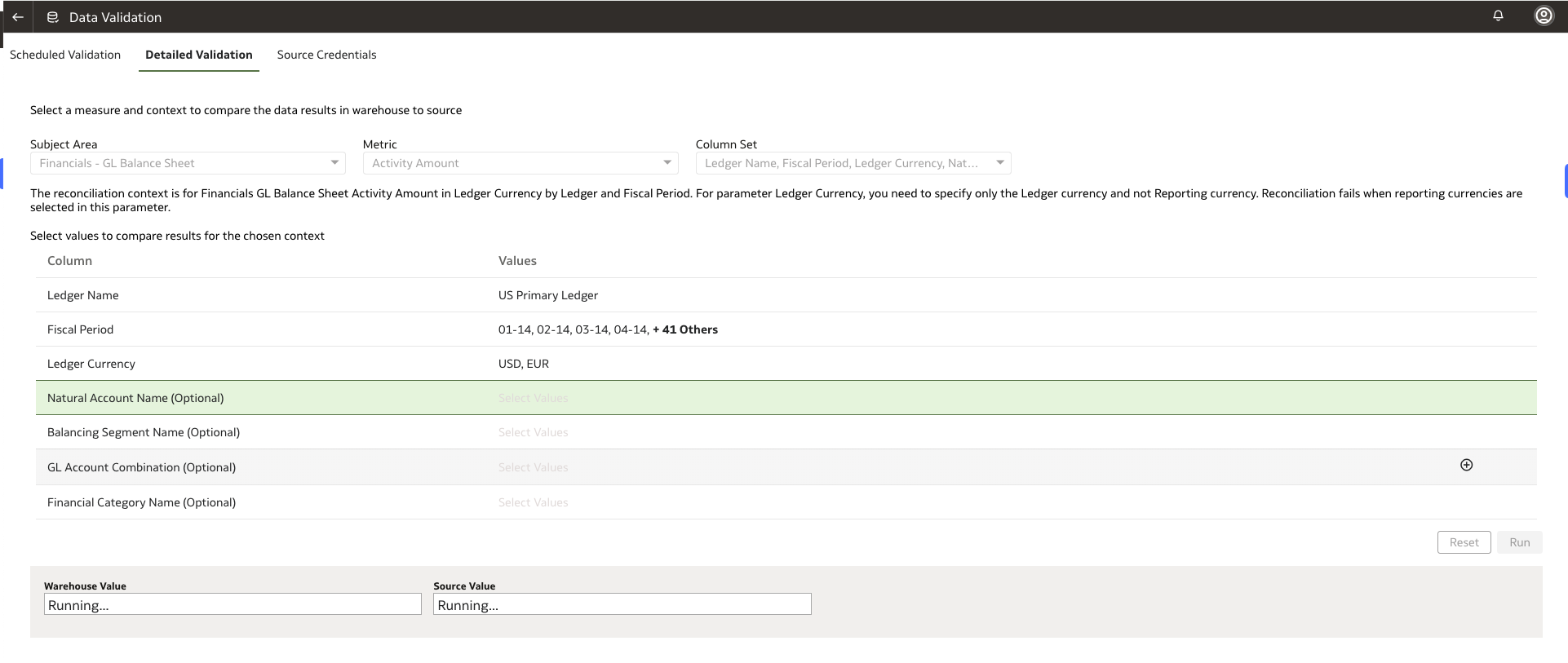
To create Ad-Hoc validation, in Detailed Validation, the subject area such as Financials – GL Balance Sheet, a metric related to the selected subject area, and the column set that you want to validate. Run the validation and review the Summary.
Figure 8: FDIP Common SA – Data Validation Detailed
Usage Tracking Subject Area
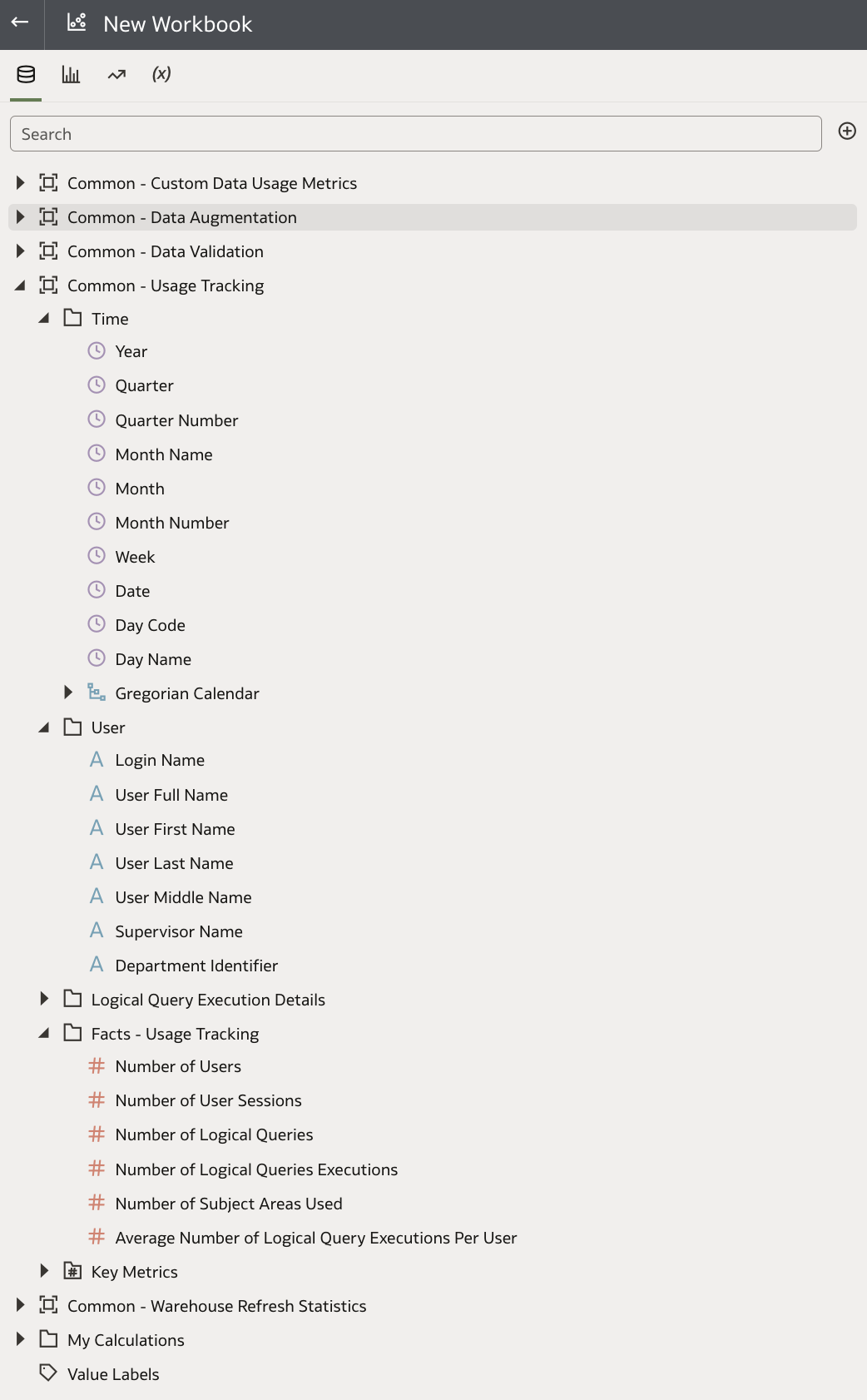
The Usage Tracking Subject Area offers severals dimensions : Time, User, Logical Query Execution Details ; and metrics such Number of Users, Number of USers sessions…, as depicted in the figure below :
Figure 5: FDIP Common SA – Usage Tracking
Warehouse Refresh Statistics Subject Area
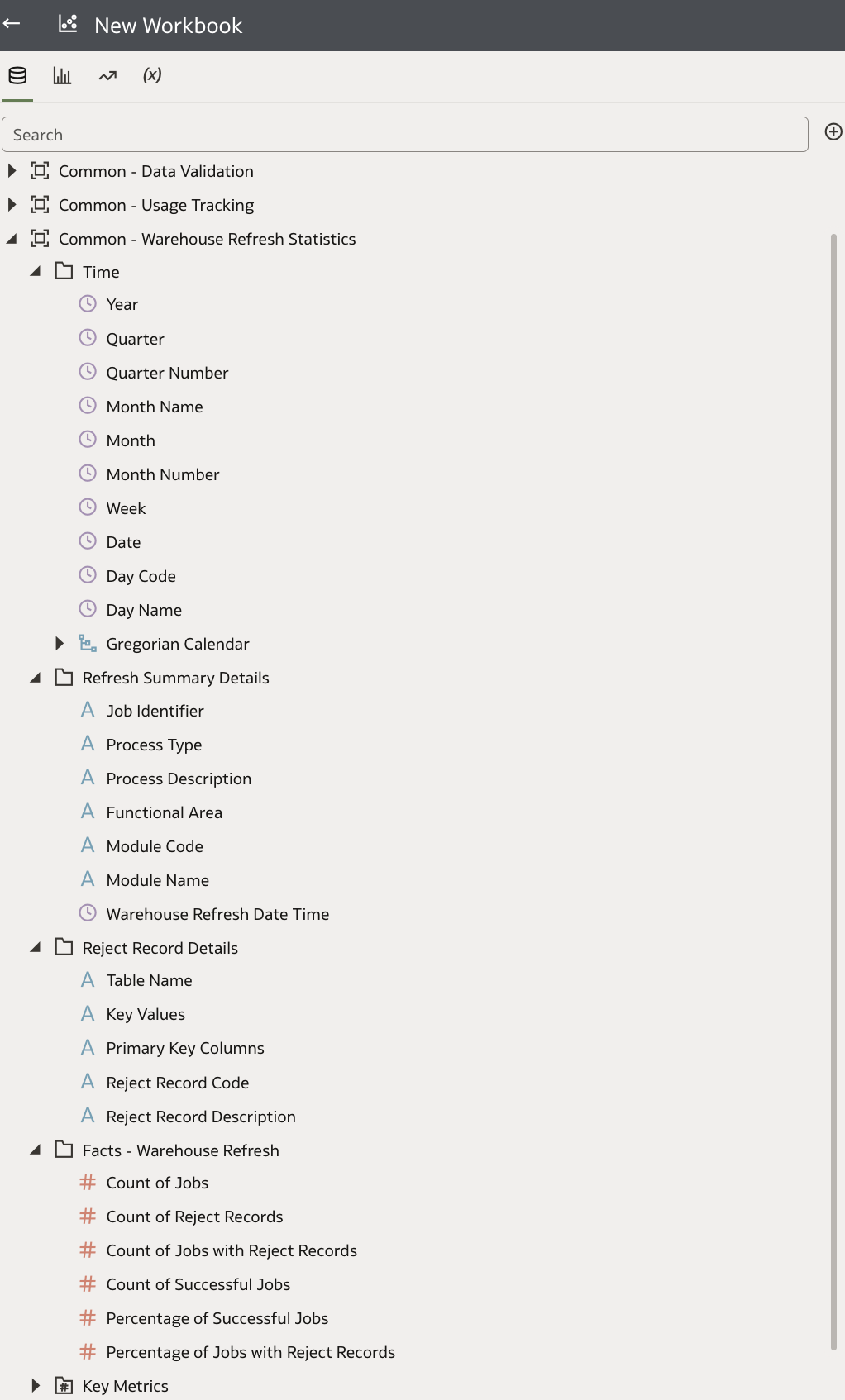
The Warehouse Refresh Statics Subject Area of several dimensions : Time, Refresh Summary details, Rejected Record Details and metrics such as Count of Jobs, Count of Rejected records …:
Figure 6: FDIP Common SA – Custom Data Usage
Video Detailed Walkthrough
The following video dives deepers into the Common Subject Areas and offers a walk through of the type of visualizations users can build with them.
Sample FDIP OAC Common Subject Area Visualization
Download the artefacts
Here is the download link to the Common SA OAC Visuzalisations
Disclaimer : these artefacts are provided “as is”, i.e. Oracle will not be responsible for supporting their use
This concludes the activities in the blog.
Want to Learn More?
Click here to sign up to the RSS feed to receive notifications for when new A-team blogs are published.
Summary
This blog described how to utilize Fusion Data Intelligence Platform to derive insight from the data pipelines executions, including data augmentations, custom data usage or user usage tracking.
It also provided walkthorugh of the capabilities for implementers or even functional users to build reconciliation dashboard to compare data in Fusion SaaS source records with data extracted and transformed in FDIP ADW, using the Data Validation features.
This blog provided an overview of the FDIP Common Subject Areas enabling FDIP users to derive insight described above. This blog also shared sample FDIP OAC data vizualisations based on these Common Subject Areas.
Bookmark this post to stay up-to-date on changes made to this blog as our products evolve.
Authors
Matthieu Lombard
Consulting Solution Architect
The Oracle A-Team is a central, outbound, highly technical team of enterprise architects, solution specialists, and software engineers.
The Oracle A-Team works with external customers and Oracle partners around the globe to provide guidance on implementation best practices, architecture design reviews, troubleshooting, and how to use Oracle products to solve customer business challenges.
I focus on data integration, data warehousing, Big Data, cloud services, and analytics (BI) products. My role included acting as the subject-matter expert on Oracle Data Integration and Analytics products and cloud services such as Oracle Data Integrator (ODI), and Oracle Analytics Cloud (OAC, OA For Fusion Apps, OAX).